How to Read a Car Lift Specification Drawing
Make your next lift a confident choice.
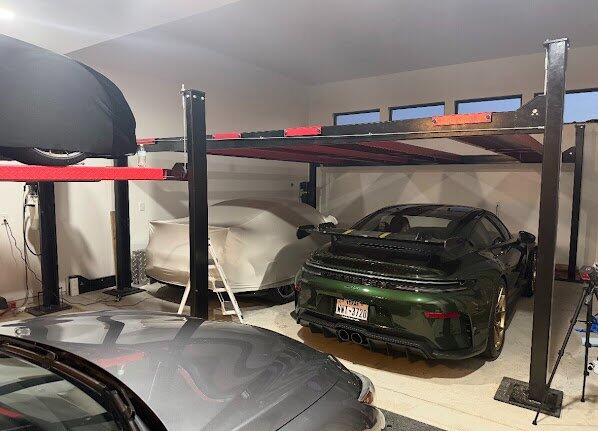
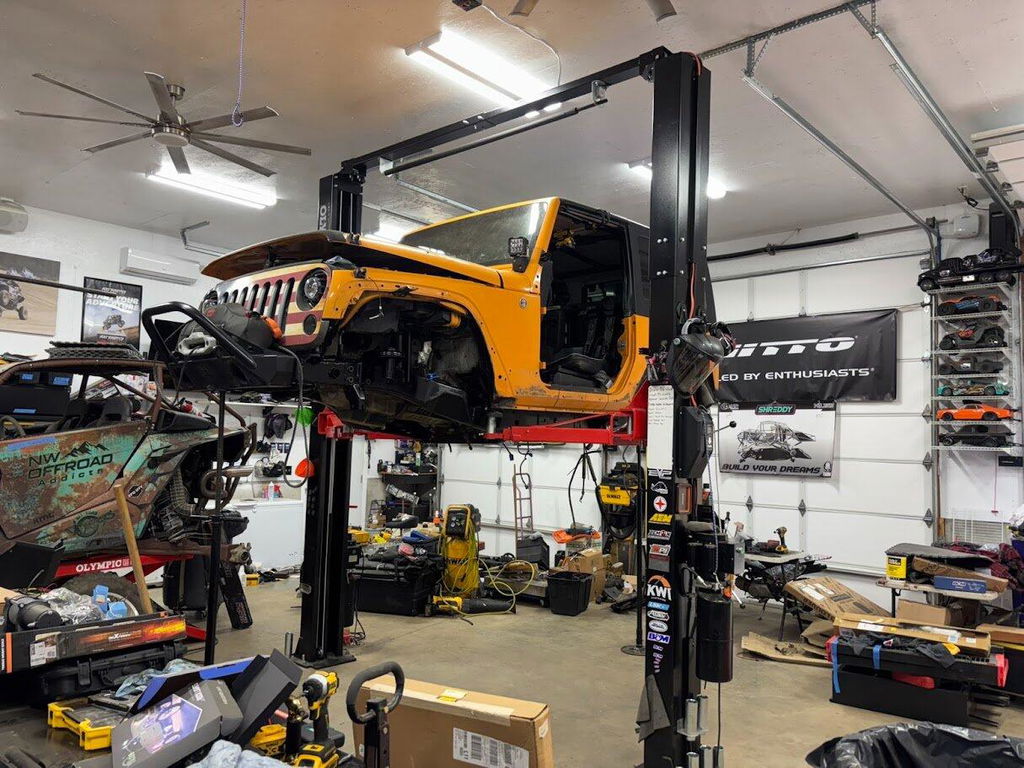
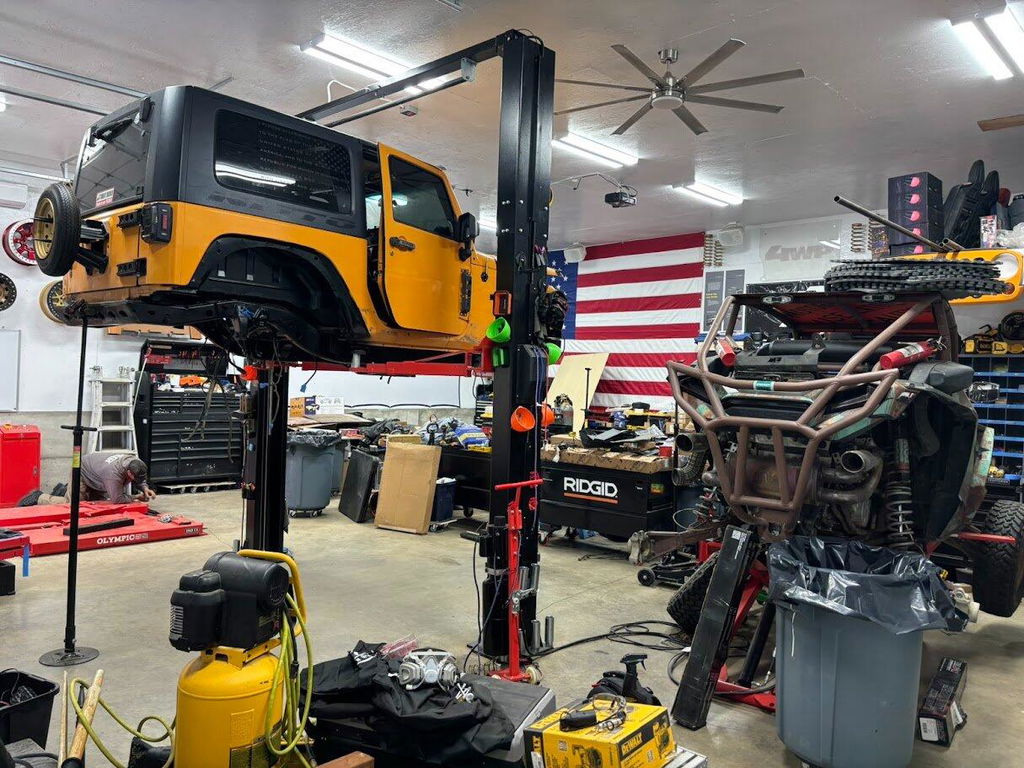
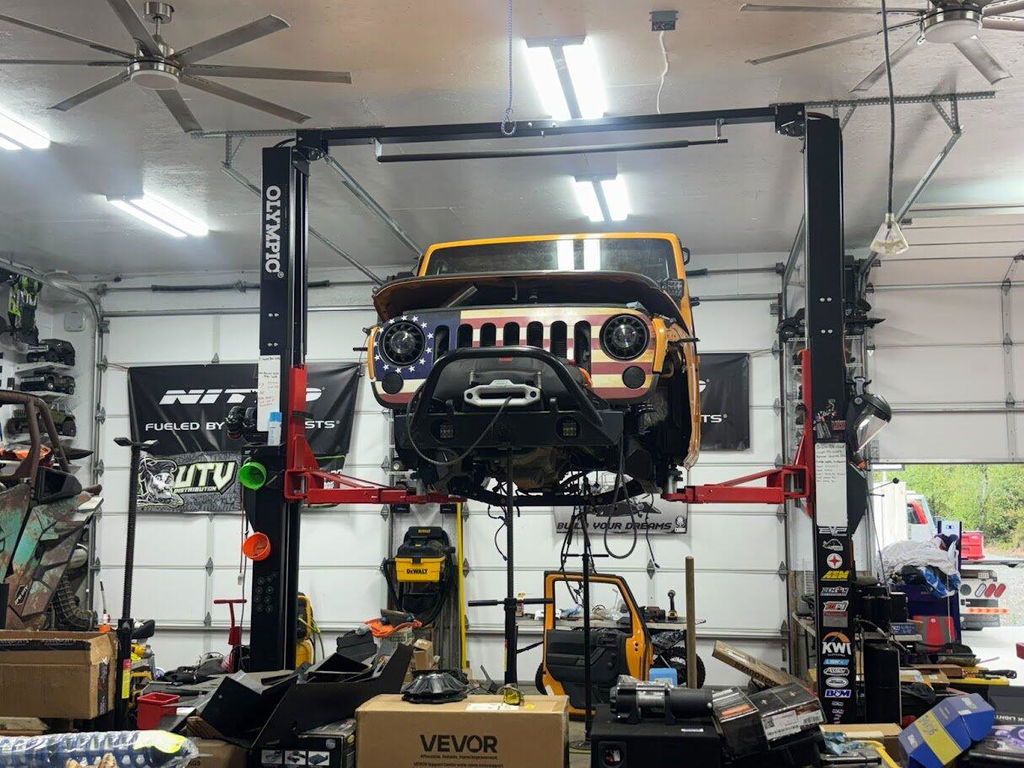
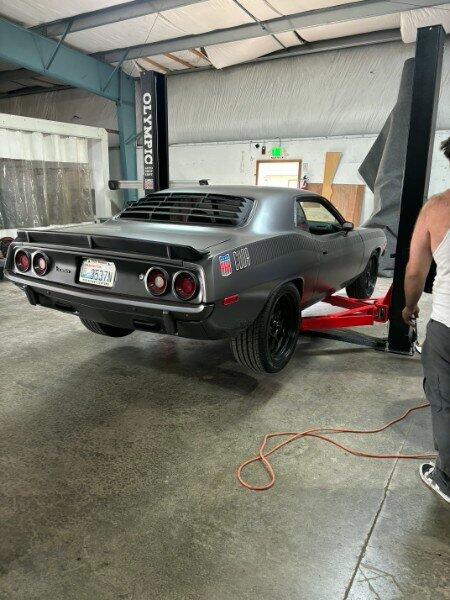
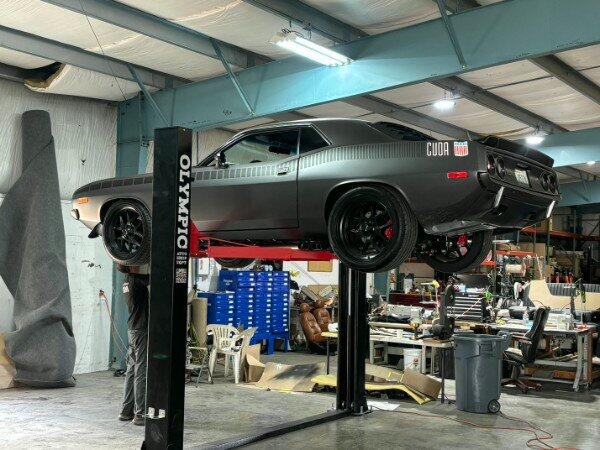
A model-specific product drawing is the source of truth for an Olympic lift’s published dimensions. Use the drawing for the exact model and configuration you plan to buy; do not estimate fit from a lifestyle photograph, rendering or a different lift with a similar name.

Measurements commonly shown on a lift drawing
| Measurement | What it tells you | Why it matters |
|---|---|---|
| Overall height | The lift’s maximum installed vertical dimension | Must fit below the ceiling, doors, lights, sprinklers, ducts and other obstructions |
| Overall width | The outside-to-outside footprint | Must fit the bay while leaving usable working and access space |
| Drive-through clearance | The usable opening for a vehicle entering the lift | Must accommodate mirrors, tires and normal approach alignment |
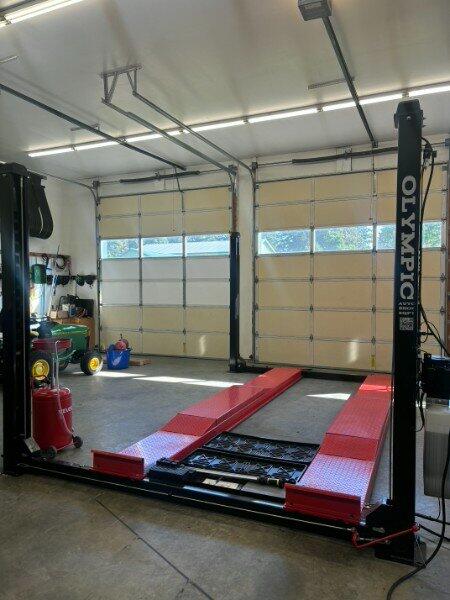
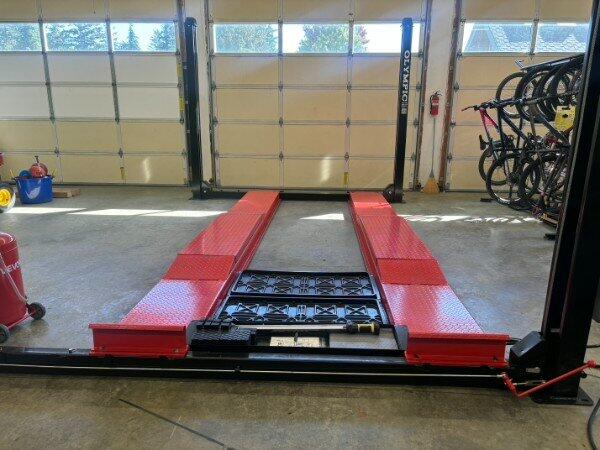
| Runway or platform dimensions | Usable length and width of the wheel-supporting surface | Must match the vehicle wheelbase, track width and tire position |
| Arm reach and pad range | Where a two-post lift can contact the vehicle | Must reach the vehicle manufacturer’s approved lifting points |
| Maximum lifting height | How high the lift raises its contact surface | Helps estimate working clearance and total raised-vehicle height |
| Approach or collapsed height | The height a vehicle must drive over or clear | Important for low-clearance vehicles and ramps |
Use the complete model number
Similar model families can have different heights, widths, runways, arms or optional configurations. Match the model number on the drawing to the model on the product page, quote and order. If a drawing has a revision date or revision code, retain that information with the purchase records.
Measure the building, not just the floor
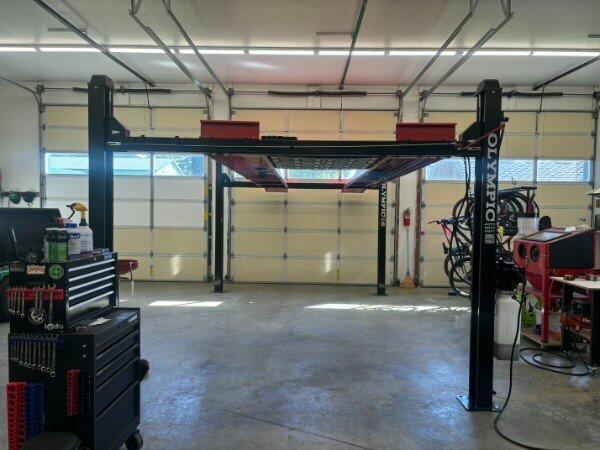
Record the bay width, bay length and clear ceiling height. Also locate overhead doors and tracks, openers, lights, fans, beams, ducts, sprinklers, mezzanines and electrical panels. A lift may fit the floor footprint while the raised vehicle still conflicts with an overhead obstruction.
Measure the intended vehicle
Confirm the vehicle’s actual configuration, wheelbase, track width, tire width, ground clearance, overall height, weight and manufacturer-approved lifting points. Include accessories and typical loads such as service bodies, toolboxes, bumpers, winches, tanks, racks and cargo.
A capacity rating is not a dimensional fit guarantee
A vehicle can weigh less than a lift’s rated capacity and still be unsuitable because its wheelbase, track width, lifting-point locations, center of gravity or ground clearance falls outside the usable geometry. Capacity and dimensional fit must both be checked.
Before ordering
- Download or request the drawing and current manual for the exact model.
- Compare every critical dimension with the building and vehicle measurements.
- Confirm concrete, anchoring and electrical requirements for that model.
- Check required clearances for operation, maintenance and emergency access.
- Send Olympic Equipment the vehicle and site details if any measurement is uncertain.
For a fit review, call 866-774-4531 or contact Olympic Equipment. Professional installation is available nationwide, subject to model, site conditions and scheduling.
Last reviewed September 6, 2026. Product dimensions and configurations are model-specific. Use the current drawing and manual supplied for the exact lift.
The right lift. The right setup.
Tell us about your vehicle, your space and your ZIP code. We’ll help you choose equipment and arrange nationwide installation.