9,000 lb vs 12,000 lb vs 15,000 lb Car Lifts
Make your next lift a confident choice.
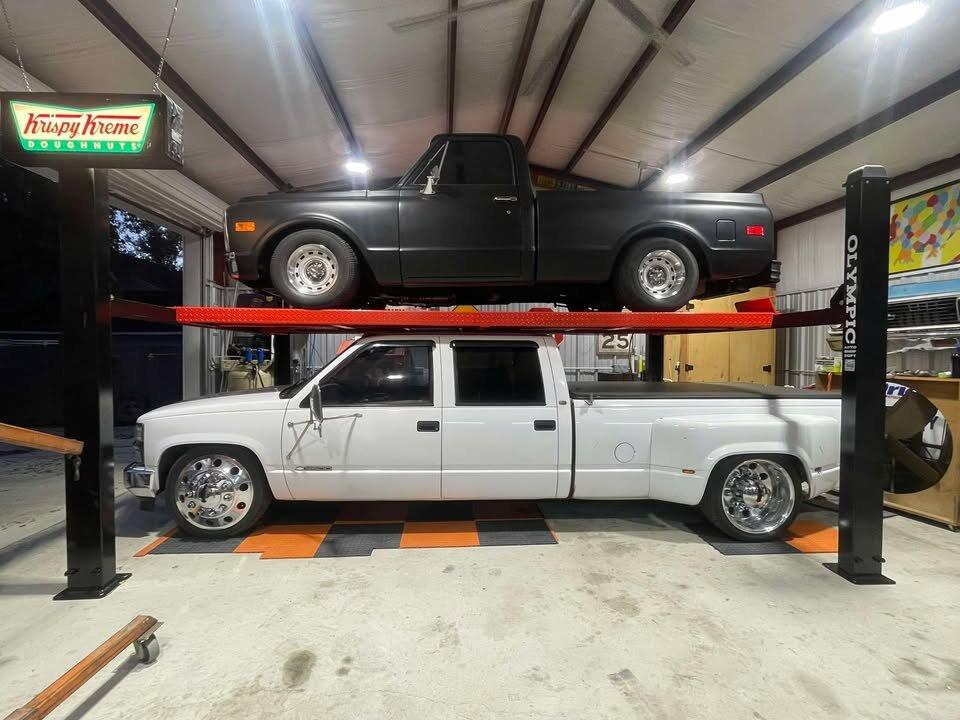
A 9,000 lb lift fits many cars and lighter pickups; 12,000 lb is a practical step up for heavier pickups and vans; 15,000 lb serves larger commercial vehicles—but only when the vehicle and facility also fit the lift geometry.

Side-by-side decision guide
| Class | Typical use | Olympic 4-post example | Published example dimensions |
|---|---|---|---|
| 9,000 lb | Home storage, cars, SUVs and compatible lighter pickups | 4PHR-9X | 112 in W; 191.3 in L without ramps; 218.9 in L with ramps; 181 in runways; 78.74 in under-runway clearance. |
| 12,000 lb | Heavier pickups, vans and mixed professional service | 4PHDXL-12 | 132.4 in W; 216.53 in L without ramps; 255.9 in L with ramps; 196.85 in runways; 21.65 in runway width. |
| 15,000 lb | Large trucks and professional alignment/service bays | 4PHDXLA-15 | 137.8 in W; 246.06 in L; 196.85 in runways; turntables and slip plates. |
When 9,000 lb is enough
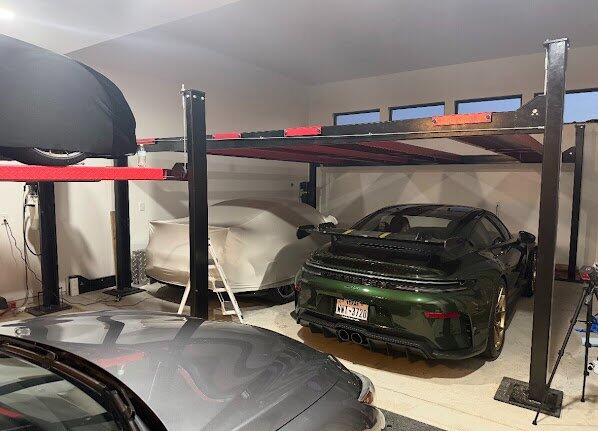
Choose this class when every planned vehicle remains comfortably below capacity and fits the runways. It often offers the best home-garage footprint and can be portable when equipped and used as directed. It is not automatically right for every pickup.
When 12,000 lb earns its space
The 12,000 lb class adds capacity and usually wider, longer, heavier construction. It is useful for mixed fleets, heavier pickups and vans, but demands more bay space, handling equipment and electrical planning.
When 15,000 lb makes sense
This is a commercial choice for larger vehicles and frequent shop use. An alignment model adds turntables and slip plates, while approved bridge jacks enable wheels-free service. The higher rating does not guarantee an F-550 or other upfitted truck fits; weigh and measure the exact vehicle.
Do not size from GVWR alone
Use actual loaded scale weight for normal service condition, then confirm front/rear axle distribution. Also verify wheelbase, tire track, tire width, runway length, lifting points, vehicle center of gravity and any accessory limit. A heavier-rated lift is not safer if the vehicle cannot be positioned correctly.
Facility tradeoffs
Higher-capacity lifts are generally wider, longer and heavier. Confirm slab requirements, anchor details, approach clearance, ceiling obstructions, voltage, compressed air if required, freight unloading and installer access. Use the current manual, not a generic concrete rule.
Related guides: How to choose a residential lift · Garage-height guide · 9,000 vs 12,000 vs 15,000 lb
Last reviewed September 2, 2026. Product specifications can change. Confirm the current product page, installation manual, local code requirements and the identification plate on the exact lift before purchase or installation.
The right lift. The right setup.
Tell us about your vehicle, your space and your ZIP code. We’ll help you choose equipment and arrange nationwide installation.