What Car Lift Do I Need for a Ford F-250, F-350, F-450 or F-550?
Make your next lift a confident choice.
Ford Super Duty lift selection depends on the exact truck’s measured working weight, axle distribution, wheelbase, dual-rear-wheel width, lift points and installed body—not just whether the badge says F-250, F-350, F-450 or F-550.

Conservative starting points
| Truck | Capacity class to begin comparing | Olympic examples |
|---|---|---|
| F-250 | 10,000–12,000 lb, depending on configuration and load | 2PBP-10, 4PHDXL-12 |
| F-350 | 12,000–15,000 lb; dual-wheel and upfitted trucks often need the larger class | 2PBP-12, 2PCFHD-15, 4PHDXLA-15 |
| F-450 | 15,000 lb or more after scale and fit review | 2PCFHD-15 for compatible known weights/lift points; 4PHDXL-22 for more margin. |
| F-550 | 22,000 lb heavy-duty 4-post is the default starting point for working trucks | 4PHDXL-22, 4PHDXL-27 or 4PHDXL-33. |
This table is a shortlist, not permission to lift. A lightly configured truck may weigh less; a crane, utility, dump, service or recovery body can weigh far more.
2-post or 4-post?
2-post: best for wheels-free work when the exact truck has approved, reachable lift points and acceptable center of gravity. Long wheelbases, bodies and uneven loads require particular care.
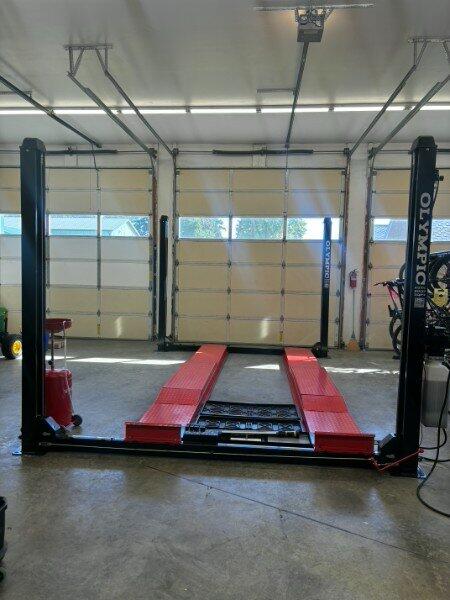
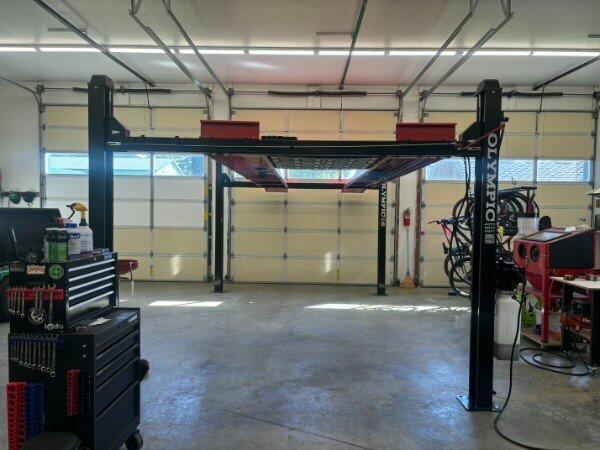
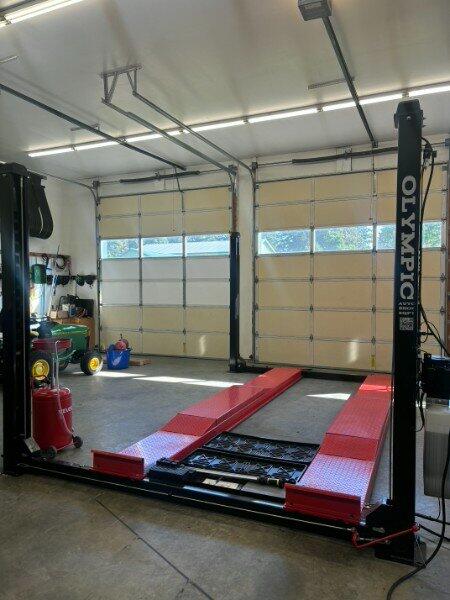
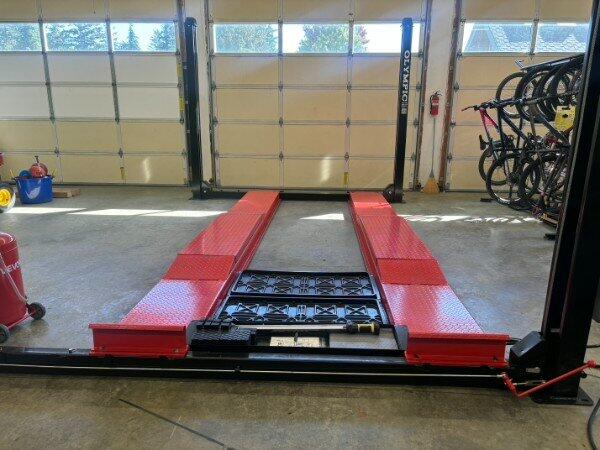
4-post: simpler drive-on positioning for trucks and better suited to very heavy or upfitted vehicles. Add approved bridge jacks for wheels-free work and confirm each jack’s axle capacity.
What to record before requesting a quote
- Model year, VIN, cab, bed or body, 4×2/4×4 and single/dual rear wheels.
- Certified scale weight in service condition plus separate axle weights.
- Wheelbase, overall length, height, tire track, tire width and rear overhang.
- Ford lift-point/upfitter guidance for the exact configuration.
- Bay width, length, clear height, slab information, voltage and unloading method.
Common mistakes
- Using towing capacity or GCWR as if it were vehicle weight.
- Assuming every truck with the same badge has the same curb weight or wheelbase.
- Ignoring tools, tanks, body equipment or cargo normally left on the truck.
- Checking total capacity but not axle, arm, runway or bridge-jack limits.
- Ordering before confirming the dimension drawing and installation manual.
The safest buying workflow
Weigh first, measure second, then send the complete data to the lift manufacturer or dealer for written confirmation. When the truck will be serviced loaded, size for that condition. If one lift must cover a fleet, size for the heaviest and most difficult configuration—not the average truck.
Vehicle reference: Ford Pro Fleet Solutions Guide. For an Olympic recommendation, call 866-774-4531.
Related guides: How to choose a residential lift · Garage-height guide · 9,000 vs 12,000 vs 15,000 lb
Last reviewed September 2, 2026. Product specifications can change. Confirm the current product page, installation manual, local code requirements and the identification plate on the exact lift before purchase or installation.
The right lift. The right setup.
Tell us about your vehicle, your space and your ZIP code. We’ll help you choose equipment and arrange nationwide installation.