How to Match a Car Lift to Your Vehicle
Make your next lift a confident choice.
Choose a vehicle lift by matching the exact vehicle, intended work and installation site—not by capacity alone. A suitable lift must accommodate the vehicle’s loaded weight, weight distribution, wheelbase or lifting-point geometry, ground clearance and the available building dimensions.

Information to collect first
| Information | Where to find it | Why it matters |
|---|---|---|
| Exact year, make, model and configuration | VIN record, registration or manufacturer information | Cab, bed, drivetrain and body configurations can change dimensions and weight |
| Actual operating weight | Certified vehicle scale when loads or modifications are significant | Accessories, equipment, fuel and cargo can raise weight beyond a basic published curb weight |
| Front and rear axle weight | Vehicle scale or reliable manufacturer documentation | Helps evaluate load distribution and balance |
| Wheelbase and track width | Manufacturer specifications or direct measurement | Critical for runway length, tire placement and usable lift geometry |
| Approved lifting points | Vehicle manufacturer service information | Two-post arms and pads must reach approved points correctly |
| Ground clearance and overall height | Direct measurement in normal operating condition | Affects approach clearance, adapter needs and raised-vehicle ceiling clearance |
Two-post lift fit
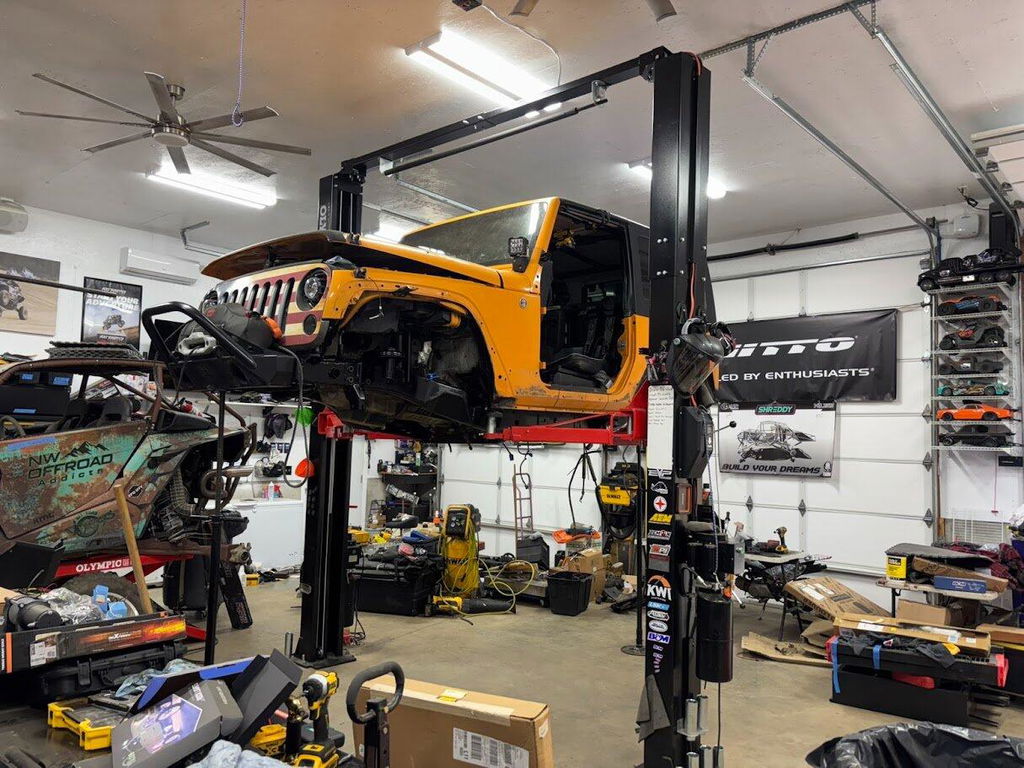
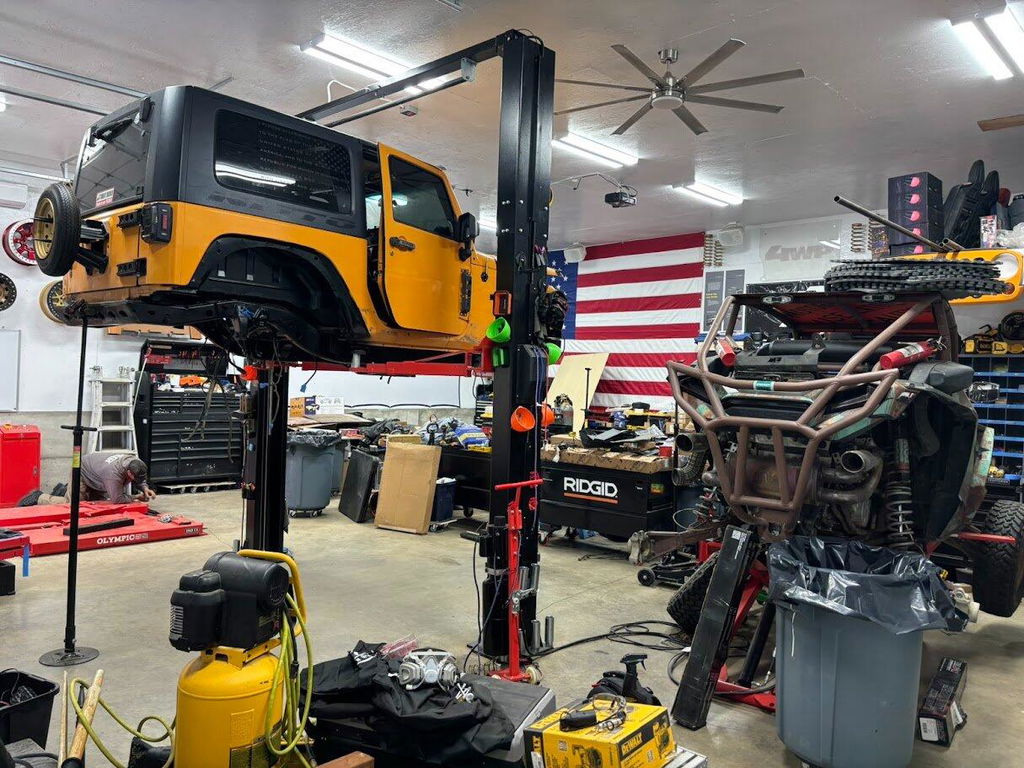
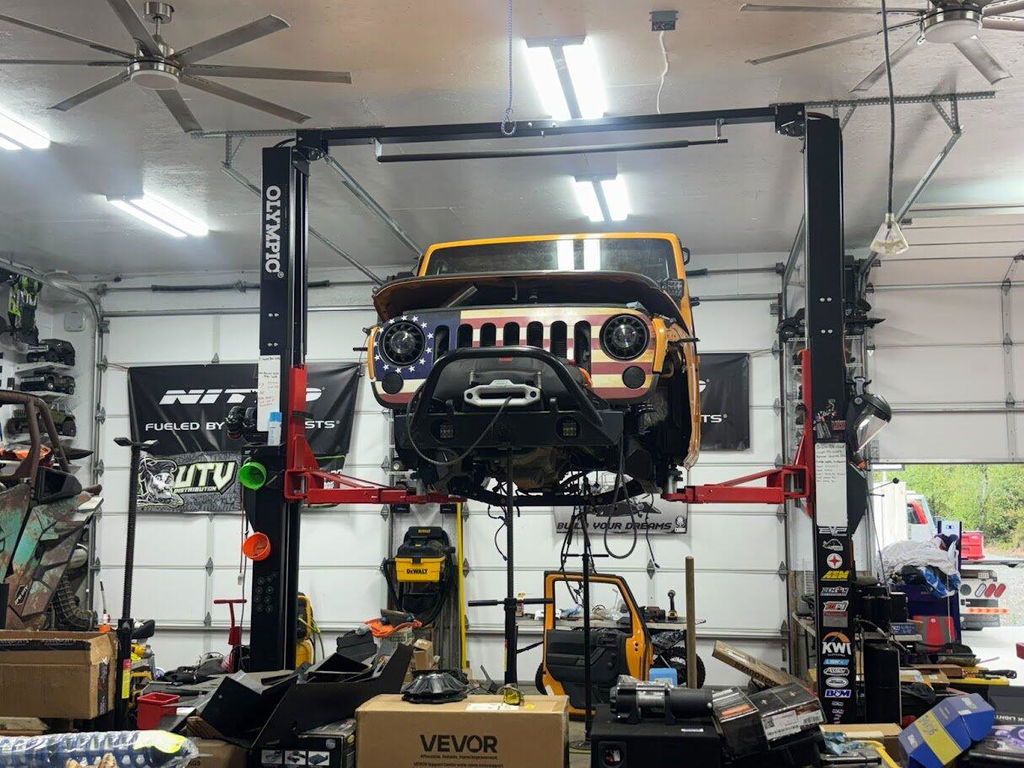
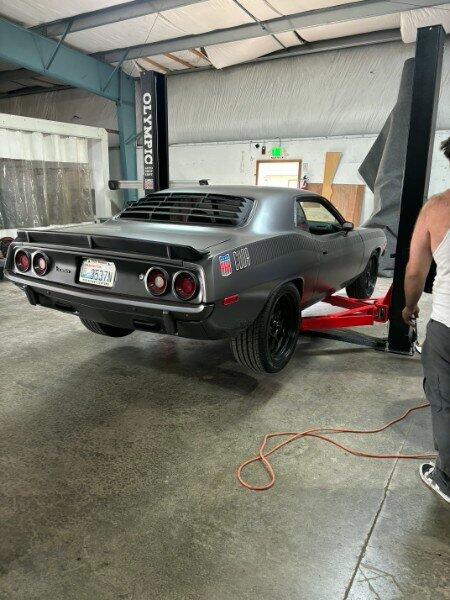
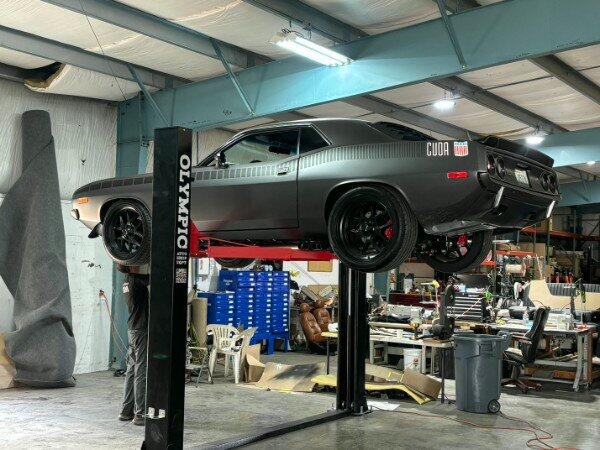
A two-post lift supports the vehicle at manufacturer-approved lifting points. Verify arm reach, pad height, adapter needs, vehicle balance and access around doors and bodywork. Long-wheelbase trucks, low vehicles and vehicles with running boards, batteries, tanks or aftermarket equipment may require closer review.
Four-post lift fit
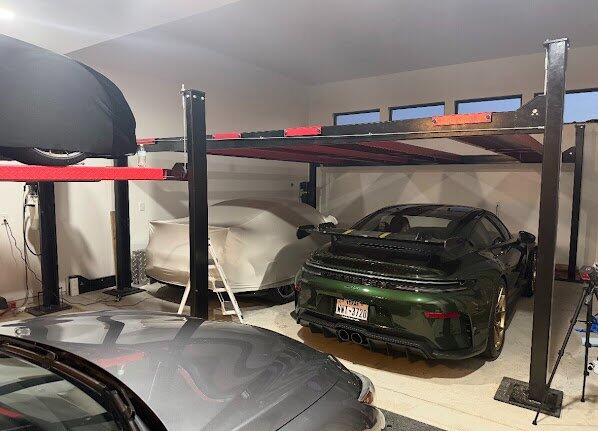
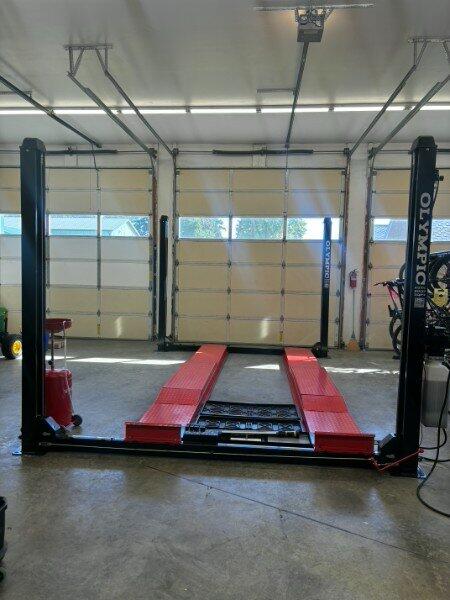
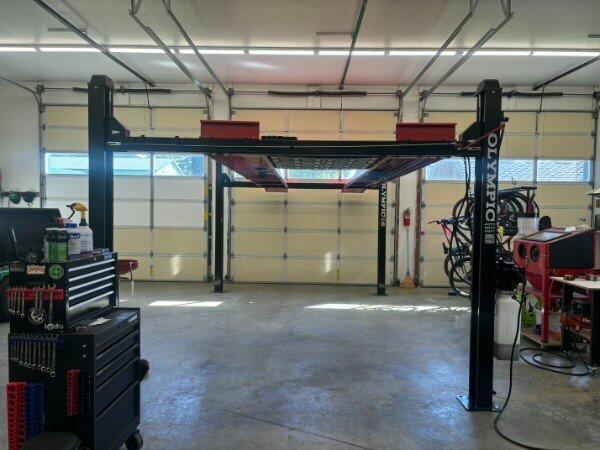
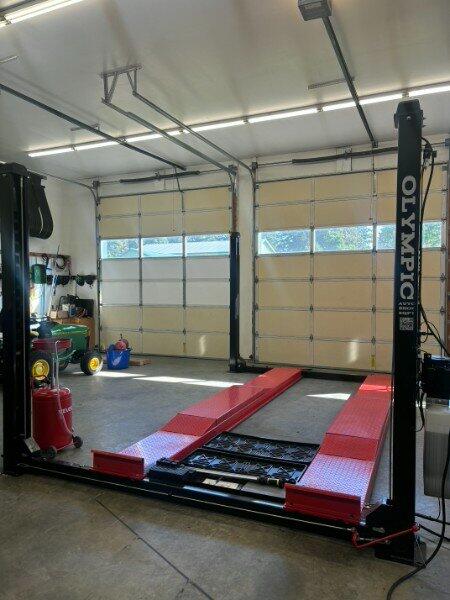
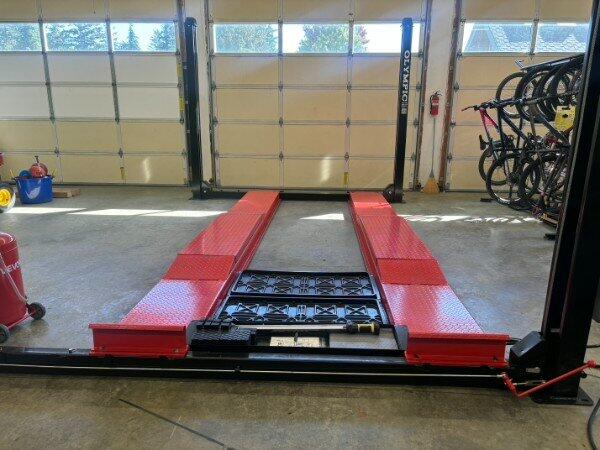
A four-post lift supports the tires on runways. Verify runway length and width, usable wheelbase range, track width, approach ramps, overall footprint and the space required for the raised vehicle. If wheels must hang free for service, confirm the appropriate bridge jack or other approved accessory.
Scissor lift fit
For a scissor lift, confirm platform position, collapsed height, approach clearance, lifting-point access and whether the structure interferes with the work you intend to perform. Portable, low-rise, mid-rise and alignment-style designs solve different problems.
Capacity is necessary, but not sufficient
The lift’s rated capacity must exceed the vehicle’s actual lifted weight within the lift manufacturer’s operating rules. Do not assume extra total capacity corrects an axle imbalance, unreachable lifting point, unsuitable adapter, excessive wheelbase or inadequate runway fit.
Site checks
- Compare the exact lift drawing with clear bay width, length and height.
- Account for the vehicle’s height when raised.
- Check overhead doors, tracks, lights, beams, fans, ducts and sprinklers.
- Verify concrete condition and thickness for the exact lift and anchoring plan.
- Confirm electrical requirements with a qualified electrician.
- Check local permit, listing and inspection requirements before installation.
Useful Olympic guides
Compare 4-post and 2-post lifts, review the 9,000 vs 12,000 vs 15,000 lb capacity guide, or see the Ford F-250 through F-550 guide.
For a model-specific recommendation, send the vehicle configuration, actual weight if modified or loaded, wheelbase, lifting-point information and site measurements to Olympic Equipment. Call 866-774-4531 or contact the team.
Last reviewed September 6, 2026. Vehicle and lift specifications can change. Verify the exact vehicle, lift model, product drawing and current manual before purchase or installation.
The right lift. The right setup.
Tell us about your vehicle, your space and your ZIP code. We’ll help you choose equipment and arrange nationwide installation.